

My Senior Dog is Having a Harder Time Going up the Stairs. Should I be Worried?
My 8 ½ y.o. Yellow Labrador Retriever Cody and I have always had this little competition for as long as we both can remember. After coming back from a long walk in the neighborhood park or a quick splash in the backyard pool, we would challenge each other to a race to the top of the stairs.
Although it was a constant source of frustration for me - Cody never lost a race – it was fun, and it was special. It was “our thing” to do, and we both really looked forward to it.
April this year marked the first time I beat my furry baby to the top. At the moment, I felt elated – after all these years, I finally beat him! (Can you tell I am a bit competitive?) I didn’t think much of it at the time.
Little did I know that I would soon find myself in a situation where I would have to encourage my perpetually happy, energetic dog to run up the eighteen stairs, even though he used to beat me to the top. Something was clearly up, so I scheduled an appointment with our veterinarian.
What I learned that day left me both relieved and worried. The good news was that there was nothing wrong with Cody. No treatment was required, and no medication was needed. What I was less than thrilled to hear was that my four-legged companion was getting old.
Our veterinarian explained to me that, on average, a dog seven years of age or older qualifies as a senior. Cody has officially entered the senior life stage, however, that doesn’t mean that he has to stop living a healthy, enriched, comfortable life. Turns out, some extra TLC, a few tweaks to his daily routine, and good preventive healthcare can keep his golden years just that, golden!
EXERCISE
Although your senior dog cannot run as fast or jump as high as he or she once could, exercise should remain an essential component of any aging dog care regimen. Studies show that dogs tend to age better, both physically and mentally, when moderate exercise is part of their daily routine. Just as in humans, exercise can also:
- Help maintain a healthy body weight (portion control is also a key to weight control). Obesity can cause health issues like diabetes, arthritis, and heart disease
- Slow the progression of old-age arthritis
- Stimulate cognitive capacity
- Heighten motor skills and coordination faculties
Cody has always loved running around after his brothers’ lacrosse balls, but now that he’s getting older, fetch is harder on his joints and muscles. Following our vet’s advice, we have modified his exercise routine by adding more low-impact activities. If you happen to live near a lake or have a pool in your backyard, swimming is a great way to stretch your aging pup’s legs without straining their joints.
A senior dog may not be up for the same epic hikes he once loved as a younger pup, but daily walks are still an important part of any dog’s life. We now keep our walks short and close to home, so that we can get back inside quickly should Cody need a rest. No more weekend warriors for us!
NUTRITION
Aging is a gradual, continuous process that is greatly influenced by nutrition. Canine nutrition is extremely important throughout a dog's life. However, making sound choices about senior dog food is an especially important aspect of senior dog care. Because of decreased physical activity and slowed metabolism, aging dogs may need 20% fewer total calories than middle-aged adult dogs.
The best senior dog foods keep dogs healthy as they age by providing high-protein, high-fiber, low-fat, and low-sodium diets. To choose the best senior dog food for your furry friend, you’ll need to consult your veterinarian.
The right food and supplements for older dogs should be considered an essential building block of healthy aging, with the aim of minimizing the effects of old age on your dog and enhancing their quality of life.
Quality matters when purchasing senior dog supplements, so it is important to do some research. When choosing a brand, consider the source of ingredients, concentration, and processing/quality control.
There is significant scientific evidence that both oral glucosamine and chondroitin, the two most common ingredients in hip and joint supplements, may improve joint health and ease arthritis symptoms.
Another helpful compound is MSM (methylsulfonylmethane). This organic form of sulfur is a natural analgesic that blocks the transmission of pain signals through the nerves and promotes joint flexibility, healthy cartilage, and elasticity of body tissues. Blended together, these three powerful ingredients provide additional support for cartilage and bone so your furry friend can enjoy an active, pain-free life.
Hip and joint supplements are arguably the most popular dog supplements on the market today, and their quality varies significantly. Make sure to consider your options carefully before choosing a brand.
Also, most products recommend starting with a “loading dose” for 4-6 weeks, and then reducing to a “maintenance dose.” I keep Cody on the loading dose, which has proven to be most effective for senior dogs like him.
If you notice that your dog is reluctant to do things that were previously not a problem for them, chances are these once-easy tasks are now painful due to swollen joints, and osteoarthritis could be the culprit.
While arthritis is not curable, developing a treatment plan in the early stages can make the condition more manageable and improve your dog's quality of life. Oral dog joint supplements may not only help prevent osteoarthritis but also slow and minimize its progression once osteoarthritis has developed.
Traditionally, Osteoarthritis has been managed with non-steroidal anti-inflammatories (NSAIDS) as the first line of treatment and during flare-ups. While NSAIDS do a good job in minimizing pain, their long-term use is not recommended due to side effects.
Additionally, long-chain polyunsaturated omega-3 fatty acids such as eicosapentaenoic acid (EPA) and docosahexaenoic acid (DHA) are beneficial for older dogs with arthritis and/or cognitive problems. These fatty acids are derived from fish oil.
Unlike many omega-3 supplements, Omega-3 by Pawsomely Healthy contains a high concentration of these two fatty acids, which may help reduce inflammation and promote cell membrane health.
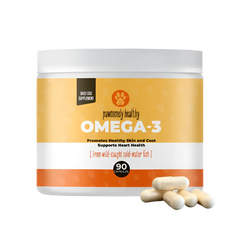
Luckily for us, the reason Cody had difficulty running up and down the stairs was his naturally decreasing mobility that occurs in aging pets. All he really needed was a powerful boost to his weakening immune system and extra support for his joints, ligaments, and tendons.
Following the checkup, we started him on our Omega-3 and high-quality joint supplements. Thanks to high concentrations of the two fatty acids coupled with a balanced mixture of Green Lipped Mussel, AquaminTM, and Manganese, boosted with Vitamin C and a powerful blend of glucosamine, MSM, and chondroitin, our beloved senior has been enjoying an active and pain-free life.